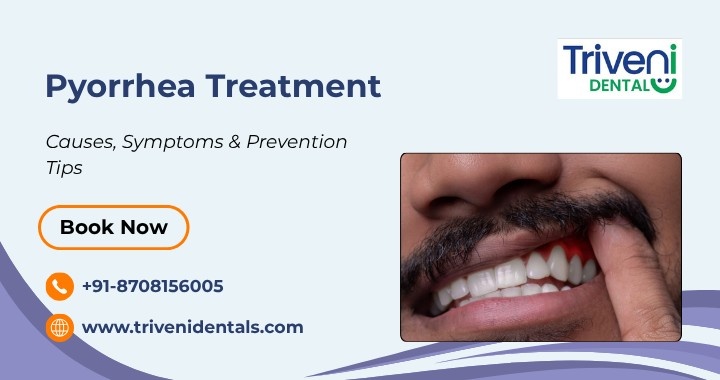
Pyorrhea Treatment Overview:
Having bleeding gums or you noticing bad breath or loose teeth? These can be signs of pyorrhea, it is a very common but serious gum disease. This blog will help you understand what pyorrhea is, its causes and symptoms, and how we can prevent it.
What is Pyorrhea?
Pyorrhea (also known as periodontitis) is a gum disease which occurs due to plaque buildup on gums which will damage the bone and tissue that support the teeth. If left untreated pyorrhea in teeth at a later stage will lead to loose tooth and even tooth loss.
Pyorrhea Causes
Below are some of the causes due to which pyorrhea occurs:
1. Plaque and tartar buildup
2. Poor Oral hygiene (not proper brushing)
3. Smoking or tobacco chewing and consumption
4. Hormonal changes and vitamin deficiency
5. Diabetes (which increase risk of infection)
6. Sometimes genetics (gum disease in family history)
If you ignore these factors, chances and risk of pyorrhea increases.
Symptoms of Pyorrhea
Early detection of pyorrhea is necessary to prevent further complication, below are some of the pyorrhea symptoms:
1. Gums bleed while brushing
2. Bad breath and swollen gums (red or dark red coloured gums)
3. Pus discharge between teeth and gums
4. Receding gums (make your teeth look longer than natural)
5. Loose teeth and movement in teeth
6. Discomfort in chewing food
If observing any of these symptoms, consult the dentist near you and get pyorrhea treatment today.
Stages of Pyorrhea
Pyorrhea get worsened at later stage, it occurs in below stage:
1. Gingivitis (Early Stage)
It is the initial stage in which gums become inflamed due to plaque buildup and you will experience mild swelling and bleeding.
Treatment: With professional cleaning by a dentist and proper oral hygiene it can be reversed.
2. Mild Periodontitis (Stage 2)
In this stage infection starts spreading out and affects the bone that holds the teeth, your gums start pulling away from the teeth, slight bleeding and you will observe slight tooth mobility and bread breath.
Treatment: With teeth cleaning/scaling and root planing it can be treated and use antibiotic treatment to control infection.
3. Moderate Periodontitis (Stage 3)
At this stage infection gets worsened and more damage occurs to bone and tissue that holds the teeth, gum pockets become deeper and tooth mobility or looseness in teeth becomes more visible.
4. Advanced Periodontitis (Stage 4)
In this stage infection becomes worse and will cause damage to gum tissues, bones, and ligaments holding the teeth in place. Teeth become loose and there is high risk of tooth loss. For its treatment your dentist can recommend you flap surgery or even bone grafting to restore the bone.
Pyorrhea Treatment
Pyorrhea can be treated, below are some of the treatment options that your dentist can recommend:
1. Professional Teeth Cleaning (Scaling): This is the most common treatment which can be recommended by your dentist to remove the plaque and tartar.
2. Deep Cleaning (Root Planing): Under this procedure, plaque and tartar will be removed below the gumline to smooth tooth root and treat gum disease.
3. Antibiotic Therapy: under this some gels and oral antibiotics are recommended to eliminate the infection.
4. Surgical Procedure: If your case is too severe, then your dentist can recommend surgery options like flap surgery and bone grafting to replace the damaged bone.
5. Gingivectomy: Under this dental procedure, by surgery the excess gum tissue will be reshaped and damaged tissue will be removed.
Is Pyorrhea curable?
Yes, pyorrhea can be cured. In the initial stages it can be fully reversed but if you have advanced gum disease then these will be controlled and managed, but some damage can’t be reversed.
How can you prevent Pyorrhea?
By following the below tips you can prevent pyorrhea to some extent:
1. Regular brush your teeth two times a day with a fluoride toothpaste and brush along your gum line
2. Try to avoid smoking and tobacco chewing because these cause gum disease.
3. Floss your teeth on a daily basis to clean the plaque between the teeth.
4. Avoid too much sugary and starchy foods, which help in growth of bacteria.
5. Avoid brushing with a hard-Bristled toothbrush to save your gums.
6. Diabetes increases the risk of gum disease so try to keep your blood sugar under control.
7. Visit your dentist every 6 months for checkup & advice.
8. Never ignore redness, swallow or bleeding gums.
Pyorrhea Treatment Cost in Bhiwani
At Triveni Dental we provide pyorrhea treatment at affordable prices, below is the approx cost for the available treatment which your dentist may recommend:
1. Pyrorrhea (Periodontitis): Rs 2500-3000
2. Scaling: 800/visit
3. Root Planing: 1500
4. Gingivectomy: 1500/tooth
Pyorrhea Treatment in Bhiwani
Are you also searching for pyorrhea treatment in Bhiwani? Choose Triveni Dental, we have 18+ years of experience in dentistry and get treated by the Best Periodontitis (Pyorrhea) Doctors in Bhiwani. We provide pyorrhea treatment at affordable prices with best results.
Conclusion
Having bleeding gums, too much plaque buildup and bad breath, don't ignore these, you might be facing pyorrhea, go to the dentist near you and get it treated. If you are searching for pyorrhea treatment in Bhiwani, then schedule your appointment at Triveni Dental.